In the scope of the LIFE Lynx project’s assessment and selection of sites and lynx for live-capture from the Carpathian source population in Romania, ACDB prepared a mid-term report on the situation of the lynx population in the capture areas in Romania.
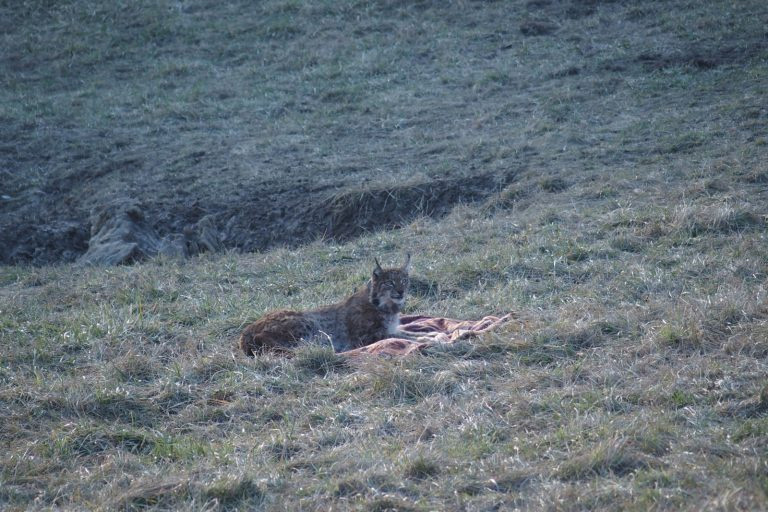
The report, Monitoring of the Eurasian lynx in the Eastern Romanian Carpathians, presents the results of over 4 years of observations (2017-2021) carried out in different parts of the Eastern Romanian Carpathians. The main goal of this project activity is to provide a comprehensive view of the post-lynx removal situation in the trapping areas and make sure that the lynx capture activity is not jeopardizing the local population. The results are promising and show that the lynx population in this area is in a favourable state, even after the last trapping season, when three lynxes from Romania were translocated to the Slovenian Alps.
The state of the population was assessed based on data gathered from systematic camera-trapping, DNA analyses, and snow-tracking and revealed that at the end of the last monitoring season (April 2021), between two and six lynxes and 1-2 females with kittens were present in the capturing areas (size ranging from 200 to 600 km2). Moreover, the report also reveals the situation of the two male lynxes captured and released in-situ last season. The two males are currently being monitored with GPS collars and they will provide new insights into lynx movements and home-ranges in the Romanian Carpathians, data which is scarce for this part of the Carpathian lynx population.